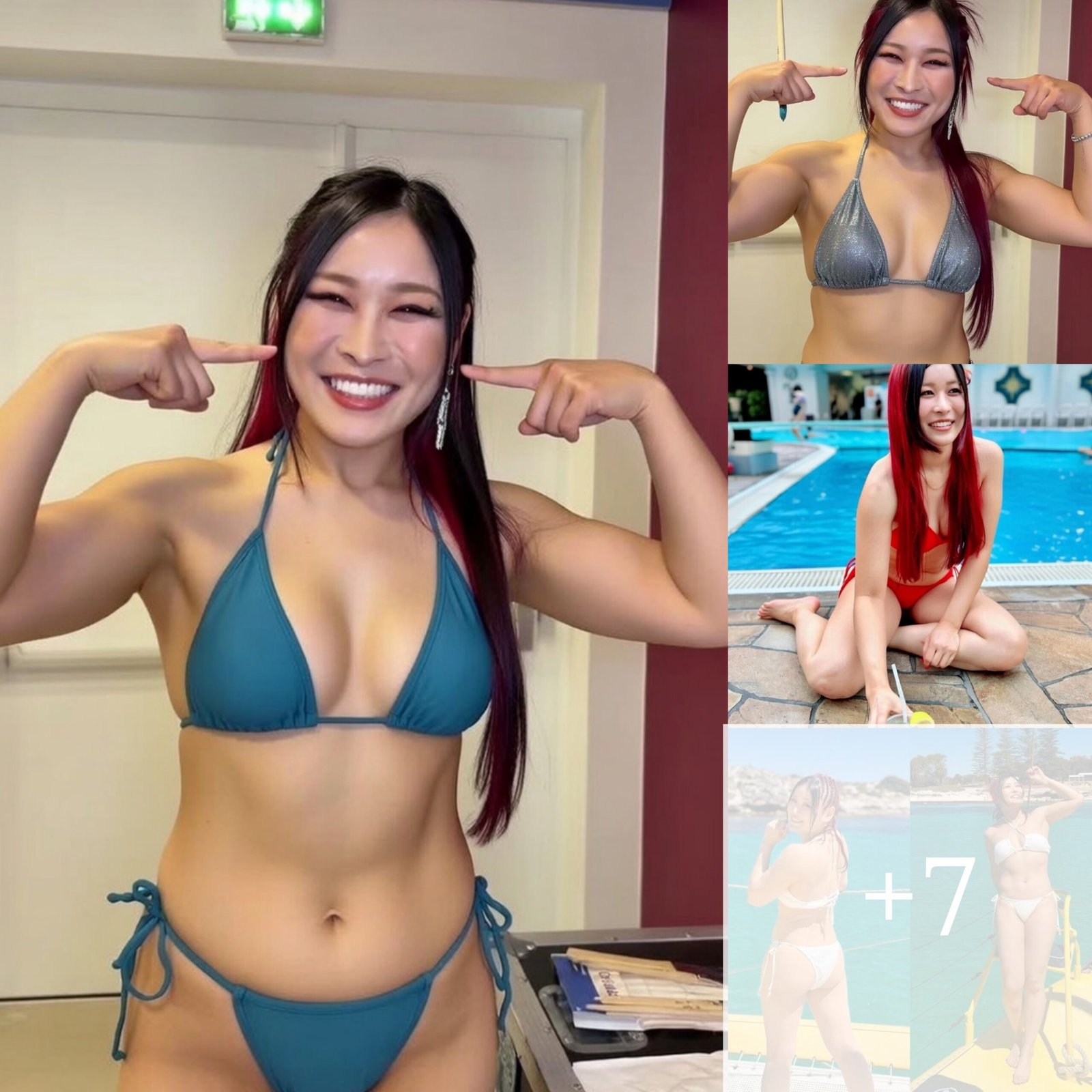
Iyō Sky: The Viral Bikini Picture That Captivated Social Media

In the hyper-competitive, glare-filled world of WWE, where narratives are crafted in the ring and personas are amplified through every possible channel, a moment of unexpected, organic virality can be a phenomenon in itself. This is precisely what happened with WWE’s “Genius of the Sky,” Iyō Sky, when a series of candid bikini photographs recently transcended the usual wrestling fandom, setting social media ablaze and sparking conversations far beyond the squared circle.
 This wasn’t a scripted segment or a promotional photoshoot for a premium live event; it was a personal moment that became a public spectacle, revealing much about modern fame, fan engagement, and the athlete behind the glittering persona.
The pictures in question, seemingly from a private vacation, showcased Iyō in a vibrant bikini, radiating joy and confidence against a picturesque beach backdrop. Her signature neon-colored hair, often seen peeking out from under her wrestling gear, was on full display, a colorful halo against the sun and sea. Almost instantly, platforms like Twitter, Instagram, and Reddit were flooded with the images. Hashtags related to her name trended, fan accounts and wrestling news portals scrambled to share them, and the comment sections filled with a tidal wave of reactions—from adoration and awe to the inevitable, less savory corners of internet discourse.
The virality was staggering. Within hours, the photos amassed hundreds of thousands of likes, shares, and comments. But to attribute this “dhoom” (uproar) solely to the aesthetic appeal of the pictures would be a superficial reading. The resonance was deeper, rooted in a combination of factors unique to Iyō’s position in the industry and the current media landscape.
First, the Element of Revelation. For fans, WWE Super stars often exist within a specific context: the arena, the ring, the backstage segment. Their bodies are seen as instruments of athleticism—powerful, durable, and often adorned with the functional armor of gear and boots. Seeing Iyō in a bikini provided a different, more relaxed, and personally expressive view. It humanized the superstar, showcasing not just the physical prowess honed for suplexes and moonsaults, but a side of personal style and off-duty ease. This glimpse behind the curtain of the performer’s public life is a powerful driver of fan connection.
Second, the Celebration of Athleticism Realized. Iyō Sky is one of the most phenomenal in-ring performers of her generation, a fact recognized globally. Her physique is a testament to years of grueling training, agility work, and the incredible demands of high-flying wrestling. The viral pictures unintentionally served as a showcase for this athletic artistry in its most natural form. Fans and fitness enthusiasts alike noted the clear evidence of strength, conditioning, and power—a body built for the breathtaking Over the Moonsault, not just for the beach. It was a celebration of the athlete’s form, divorced from the context of combat, which many found inspiring.
Third, the Power of Unfiltered Joy. Perhaps the most captivating element in the photos was Iyō’s evident happiness. In an industry where performers often portray intense, angry, or arrogant characters (Iyō’s own Damage CTRL persona leans into cocky dominance), these images captured pure, unscripted joy. This authenticity is magnetic on social media. It reminded the audience that beneath the “Sky Champion” bravado is a person who enjoys life’s simple pleasures. This authenticity breaks down the fourth wall in a way scripted entertainment often cannot, fostering a stronger, more personal bond with the audience.

However, the virality also opens a complex dialogue about the public perception of female athletes. Female WWE Superstars, like many women in sports, often navigate a precarious line between being celebrated for their athletic skill and being objectified for their appearance. The reaction to Iyō’s pictures was a microcosm of this ongoing tension. While many comments celebrated her strength and confidence, others reduced her to mere physicality. This incident highlights the ongoing challenge: allowing female athletes the same freedom to share personal moments without having their professional accomplishments overshadowed by reductive scrutiny.
From a branding perspective, this organic virality is a marketer’s dream—a massive surge of positive, widespread attention that wasn’t paid for. It amplifies Iyō’s star power, introduces her to potential new fans outside the wrestling bubble, and reinforces her image as a confident, vibrant, and aspirational figure. It demonstrates that her appeal is multi-dimensional; she can command the ring at WrestleMania and just as effortlessly command the trending page on Twitter.
Importantly, this moment also sits within Iyō’s broader narrative of self-confidence. As part of Damage CTRL, she projects an image of cool, collected superiority. These pictures, in contrast, showed a different kind of confidence—one that is personal, relaxed, and self-assured. It completes the picture of Iyō Sky not just as a champion in WWE, but as an individual fully in command of her own image and space in the world.
In conclusion, the viral eruption over Iyō Sky’s bikini pictures was far more than just a flash of social media buzz. It was a cultural moment that intersected fandom, athletic appreciation, personal branding, and the complexities of fame in the digital age. It revealed the public’s desire to connect with the person behind the persona, celebrated the physique of a world-class athlete in a new context, and demonstrated the raw power of authentic joy. While the “dhoom” may slowly fade from the immediate social media timeline, its impact lingers—it has added a new layer to the story of Iyō Sky, reminding everyone why she shines so brightly, both under the arena lights and under the sun.
About the Author